Mr. Sneako goes to Kabul
An American streamer visits Taliban-controlled Afghanistan, where even the Taliban appear to be losing patience with him.

Mr. Sneako Goes to Kabul
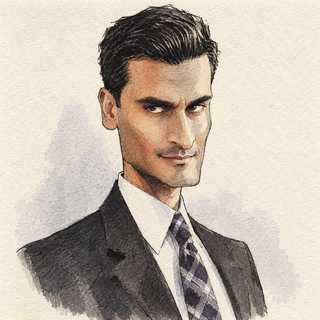
There are few people in the world who could visit Taliban-controlled Afghanistan and somehow make the Taliban appear to be the sensible adults in the room. Nicolas Kenn De Balinthazy, better known as Sneako, has managed it in less than a week.
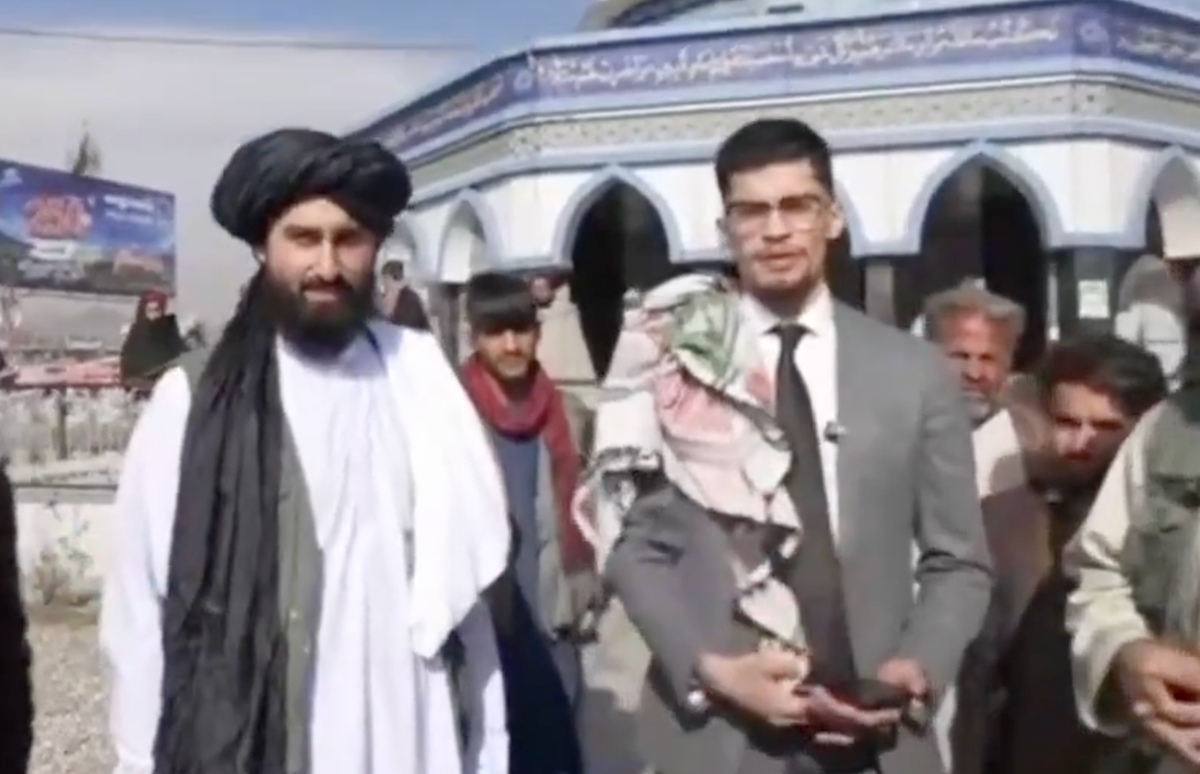
The American streamer, professional provocateur, and occasional political philosopher arrived in Kabul in mid-November, apparently determined to expose the lies of the Western establishment and discover the virtues of life under Islamic sharia. His hosts have been remarkably accommodating, granting him interviews, photo opportunities, and guided excursions around the Afghan capital. Unfortunately for Sneako, his hosts also seem obliged to correct him whenever he opens his mouth.
The spectacle has produced some extraordinary footage. In one encounter, Sneako apparently tries to introduce an antisemitic chant to his Taliban companions, only to encounter resistance. In another, he attempted to explain to an Afghan interlocutor that the United States had created the Taliban, only to be corrected by the very people whose history he was attempting to explain.
Imagine traveling halfway around the world to flatter a terrorist movement and finding yourself repeatedly corrected by its members.
Sneako has never been particularly restrained in his expressions of hostility toward Jews and Israel. Among his favored slogans is "Khaybar, Khaybar, ya Yahud," a reference to the seventh-century Battle of Khaybar, in which Muhammad's forces defeated and conquered the Jewish inhabitants of an Arabian oasis. The chant invokes the return of Muhammad's army and has long been employed as an antisemitic threat.
During his visit to Afghanistan, Sneako was filmed reportedly attempting to introduce the Khaybar slogan. The conversation became awkward when his companions appeared unwilling to indulge the performance. Accounts of the clip differ on precisely which phrase was rejected, but the exchange hardly resembled the enthusiastic reception Sneako might have anticipated.
Australian activist Drew Pavlou summarized the incident by observing that Sneako frequently chants the slogan on the streets of New York but apparently could not get away with it in Afghanistan. The idea that Sneako has somehow managed to be too antisemitic for the Taliban is simply delicious.
It's possible that they may simply have a better understanding of public relations than their American guest. The Taliban are attempting to present themselves as responsible governors rather than the insurgents who spent two decades fighting American and coalition forces. An excitable American influencer shouting inflammatory slogans into a livestream is not necessarily the image their foreign ministry wishes to cultivate, despite the fact that they are the Taliban.
Sneako, who enjoys considerable freedom to indulge such theatrics on the streets of New York, seems to have discovered that Kabul has rather different expectations of its visiting celebrities.
Sneako's difficulties were not confined to religious slogans. In another widely circulated exchange, he attempted to advance the familiar claim that the United States had created the Taliban to one of his new jihadi acquaintances. His Afghan interlocutor was unimpressed.
"I will be honest with you," the man replied, explaining that the Taliban "was not created by the USSR or the Americans."
One can imagine Sneako's disappointment at discovering that an actual member of the movement was less enthusiastic about his conspiracy theory than the average American manosphere podcaster.
The historical confusion is particularly embarrassing because the origins of the Taliban are not especially mysterious. The movement emerged in the early 1990s, principally among Afghan religious students and former mujahideen, amid the civil war that followed the collapse of the Soviet-backed Afghan government. It seized Kabul in 1996, establishing the first Taliban emirate.
The United States had supported Afghan mujahideen factions fighting the Soviet occupation during the 1980s, often through Pakistan's ISI intelligence agency. Some of the fighters and networks involved in that earlier conflict subsequently became associated with the Taliban. The Haqqani Network is a prominent example.
These historical connections have provided endless material for the popular assertion that America created the Taliban. Yet American support for anti-Soviet fighters in the 1980s is not the same thing as the creation of an organization that emerged several years later. Sneako had evidently arrived with the simpler version of events already committed to memory, and his host was obliged to introduce some nuance.
A separate encounter proved scarcely more successful. When Sneako asked an Afghan man what had happened to a building during the American occupation, apparently fishing for an account of destruction, the man replied that nothing had happened and that the building had been safe.
The unfortunate pattern is becoming difficult to ignore. Sneako arrives armed with an accusation against America, and the Afghans he encounters stubbornly refuse to follow the script.
Among Sneako's more distinguished hosts was Anas Haqqani, a member of one of Afghanistan's most notorious militant families. His brother, Sirajuddin Haqqani, serves as the Taliban's interior minister and is a senior figure in the Haqqani Network, which the United States designated a Foreign Terrorist Organization in 2012.
Founded by Jalaluddin Haqqani, the network became notorious for suicide bombings and other attacks against Afghan civilians, American forces, and coalition personnel. Its ties to al-Qaeda and its integration into the Taliban's military structure are extensively documented. The Middle East Forum and its Islamist Watch project have examined Islamist militancy and the networks that sustain it.
Sneako's visit also included an interview with Abdul Qahar Balkhi, spokesman for the Taliban's Ministry of Foreign Affairs. Balkhi offered his government's account of the American war, suggesting that the invasion had been driven by geopolitical interests rather than the September 11 attacks. Sneako promoted coverage of the interview with the declaration, "All lies will be exposed."
The Taliban sheltered al-Qaeda before September 11, and Osama bin Laden remained in Afghanistan under their protection when the United States demanded his surrender. Whatever one's assessment of America's subsequent twenty-year war, its origins are hardly the great unsolved mystery Sneako seems to imagine.
Most American tourists return from their holidays with photographs of mountains, monuments, and the occasional disappointing hotel breakfast. Sneako has photographs with the Haqqanis and an increasingly impressive collection of awkward conversations.
Sneako's enthusiasm for his new surroundings becomes somewhat less surprising when one considers his recent religious education.
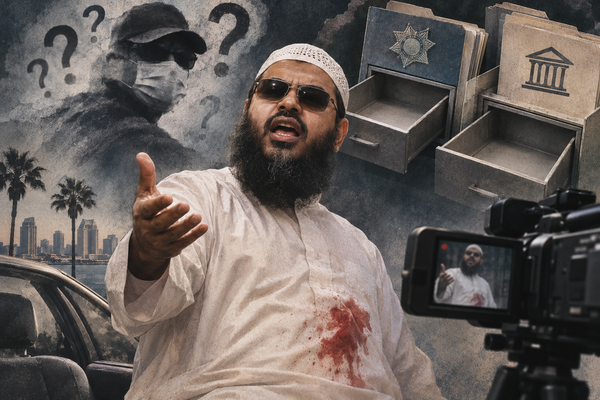
The streamer converted to Islam in 2023, during a period of increasingly close association with Muslim influencers and preachers, among them the San Diego-based Sheikh Uthman Ibn Farooq.
Readers of The Directorate will be familiar with Farooq, whose account of an alleged anti-Muslim stabbing attack has attracted considerable scrutiny. The preacher has amassed an enormous international following through street debates, confrontational religious encounters, and videos in which he presents himself as a fearless defender of Islam against its critics.
Sneako was already well acquainted with this style of performance. His own career has been built on provocation, public confrontation, and the promise of revealing truths supposedly concealed by powerful institutions. The relationship between the two men was a natural fit. Farooq had an eager celebrity convert, while Sneako acquired a religious mentor whose confrontational style was well-suited to his existing audience.
While there is no link between Farooq and Sneako's Afghan excursion, his association with the streamer provides some useful background to the latter's ideological transformation. In the space of a few years, Sneako has gone from internet provocateur to Muslim convert to enthusiastic visitor of Taliban-controlled Afghanistan, apparently acquiring along the way an encyclopedic collection of grievances against the West. His understanding of Afghan history appears rather less developed.
Sneako's excursion also included a visit to a girls' primary or Islamic school in Kabul, where he filmed young students reciting Quranic verses and distributed chocolate. The footage was presented as evidence against Western accounts of the Taliban's restrictions on female education.
This would have been a remarkable discovery had anyone claimed that the Taliban prohibited every girl in Afghanistan from entering a classroom.
The actual restrictions concern secondary and higher education. Girls have been barred from attending school beyond the sixth grade, while women have been excluded from universities. UNICEF and UNESCO have documented the consequences for millions of Afghan girls and young women. Primary education, including certain forms of religious instruction, continues in parts of the country.
Sneako's discovery that young girls attend school is therefore rather more like visiting a hospital maternity ward and concluding that reports of an aging population are a hoax.
The streamer has reportedly challenged Western accounts of women's restrictions and raised the subject with Taliban officials, who offered explanations involving infrastructure and funding. Afghanistan undoubtedly suffers from severe infrastructure problems after decades of war. But a shortage of classrooms does not explain why girls are permitted to complete certain grades and prohibited from proceeding further.
The Afghan women excluded from universities might reasonably wonder why a visiting American with a camera has become such an authority on their circumstances.
The Taliban have good reason to cultivate foreign visitors who can present a more flattering picture of their country. Their government remains diplomatically isolated from much of the West, and its treatment of women has made international recognition and cooperation considerably more difficult.
An American influencer with a substantial audience, eager to demonstrate that the Western media have misrepresented Afghanistan, presents an attractive opportunity. He can interview government officials, visit selected institutions, and broadcast pleasant encounters with ordinary Afghans without the Taliban having to produce the material themselves.
Sneako has reportedly shortened his trip after only a few days, although the footage continues to circulate. His visit has attracted criticism from activists and commentators, including Laura Loomer, who says she (thankfully) reported his activities to federal authorities.
Having spent his holiday fraternizing with members of a U.S.-designated terrorist organization, Sneako seemed genuinely bewildered when American authorities reportedly questioned him for eight hours upon his return, indignantly declaring, “Everybody wants freedom of speech until a real n**** freely speaks.” Apparently, the distinction between freedom of speech and spending a holiday with members of a terrorist organization that America has been at war with for two decades was lost on him.
Still, the more entertaining criticism has come from the footage itself. The spectacle is peculiar. Sneako appears desperate to persuade his audience that the Taliban have been misunderstood, while some of the very people he has traveled to defend seem considerably less interested in his ideological crusade. He tries to provoke anti-American statements and encounters total indifference. He offers an account of the Taliban's origins and immediately gets corrected. He ventures into inflammatory religious slogans and finds that his hosts have their own ideas about what should be said in public.
It is a rather extraordinary situation when the representatives of a militant Islamist regime find themselves exercising more restraint in public than the American visitor who has come to celebrate them. Sneako set out for Kabul hoping to expose the ignorance and dishonesty of the Western world. He has instead spent much of his visit demonstrating how little he knows about the country whose rulers he so admires.
He may yet return home convinced that he has uncovered the truth about Afghanistan. The Taliban, meanwhile, might be relieved to see the back of him.